




Choosing Your Radiator by Type
If you’re in the market for an original cast iron radiator, there are a few ways of choosing your ideal match.
In this section, you’ll find an introduction to the six main categories of vintage radiators, each with its own unique style and history. If there’s a particular manufacturer you like or want to learn more about, visit our radiators by manufacturer page.
If you need assistance or advice, feel free to email [email protected] or call 020-3397-7295, and one of our experts will be happy to guide you through the process.
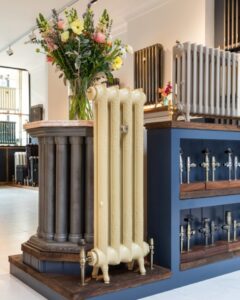
Image: A polished 9 column 30 in. Ideal Classic radiator by the National Radiator Company.
Types of Cast Iron Radiator
School Radiators
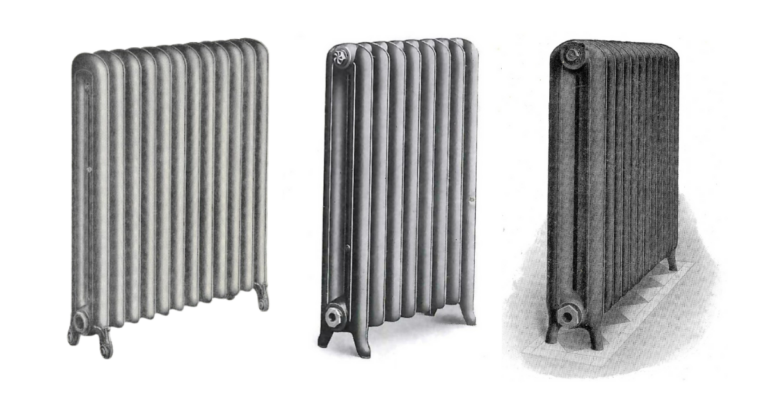
School radiators are known for their sturdy construction, curved tops, and clean, flush finish. They gained popularity in the 1890s in the United States and by the early 1900s in the UK, where they were installed in countless schools, libraries, and other public buildings, valued for their practicality and long-lasting durability.
Today, school radiators have seen a welcomed resurgence in domestic settings, offering a sense of period charm and a vintage touch to traditional and modern homes alike.
Our range includes iconic designs like the Princess and Ideal Plain, radiators that many of us have encountered in public spaces throughout the decades, now restored for the home.
Shop School Radiators
Picture: The Peerless (left), Ideal Plain (middle) and Princess school radiator (right).
Column Radiators
Their slim, symmetrical columns and delicate form gave them a versatility that few other radiator styles could match, fitting seamlessly into both grand public spaces and cosy domestic interiors where we often find them today.
Today, column radiators remain the most popular choice, with their design continuing to influence modern cast iron radiator styles in the modern age.
Shop Column Radiators
Image: The Neo Classic (left), Ideal Classic (middle) and Pall Mall column radiator (right).

Ornate Radiators
Ornate radiators hold a special place in the cast iron radiator industry, distinguished by their intricate designs and decorative motifs. These were among the earliest radiators to ever be produced, emerging from the East Coast of the United States in the 1880s, a time marked by the opulence of the Gilded Age. As skyscrapers rose and architectural styles became more elaborate, so too did the radiators.
By the late 1890s, ornate radiators made their way to the UK, where models like the Rococo and National became particularly sought after. Often found in stately public buildings, they can still be seen today in iconic locations such as the National Museum of Scotland and Leicester Cathedral, where we recently restored some National radiators by the American Radiator Company.
Shop Ornate Radiators
The Decorated (left), Rococo (middle), and National ornate radiator (right).

Hospital Radiators
Hospital radiators are easily identified by their single, deep column per section, designed with practicality in mind. Their minimalist form, free from ornamentation, leaves plenty of space between each section, making them incredibly easy to clean, ideal for environments where extra hygiene is desired. Originally designed as utility radiators, their clean, functional aesthetic has stood the test of time and translated into stylish pieces of furniture.
Don’t let the name mislead you – while, like many of us, these radiators were born in the hospital, they certainly aren’t stuck there. With their simple yet robust design, these radiators bring a subtle heritage charm to interiors, whether in public spaces or private home.
Shop Hospital Radiators
The Beeston Boiler Company’s “Hospital” radiator (left), Crane’s Hospital Radiator (middle) and The Ideal Hospital radiator (right).

Church Radiators
Church radiators stand apart as a distant ancestor of the modern cast iron radiator. While both are typically made of cast iron (with some early models built from wrought iron), church radiators feature a distinctive construction. Rather than connecting sections like modern radiators, they often consist of looped tubes plugged into a base, sometimes topped with a metallic or mantle surface.
Originally used to heat churches in the mid to late 1800s, these radiators replaced large stoves as a more efficient way to warm vast, open spaces. Within the church radiator category, we see a variety of designs, from the more common long, multi-tube configurations to the rarer pedestal radiators (pictured here), each carrying its own unique historical and architectural charm.
Shop Church Radiators
Picture The popular Sunbeam radiator (left) and a pedestal-style church radiator (right).

Bay Window Radiators
Picture: The Ideal Classic 9 column 13 in. radiator (left) and Rococo Window Radiator (right).
