



Beeston Boiler Company
“With Beeston radiators installed you may be certain that the bedrooms will always be maintained at a comfortable temperature.” – Beeston Robin Hood manual (1936)
The History of the Beeston Boiler Company
Who Was the Beeston Boiler Company?
The Beeston Boiler Company was a key player in Britain’s central heating industry, standing shoulder to shoulder with giants like Crane and the National Radiator Company.
Their radiators were highly sought after, with installations in iconic buildings such as London’s Centre Point tower. They were also the go-to choice for prestigious contractors like Rosser and Russell, who handled heating projects for the Home Office and Queen Victoria’s Osborne House. Known for their quality, Beeston radiators were cast and manufactured by hand by a skilled workforce of 850 until the 1950s.
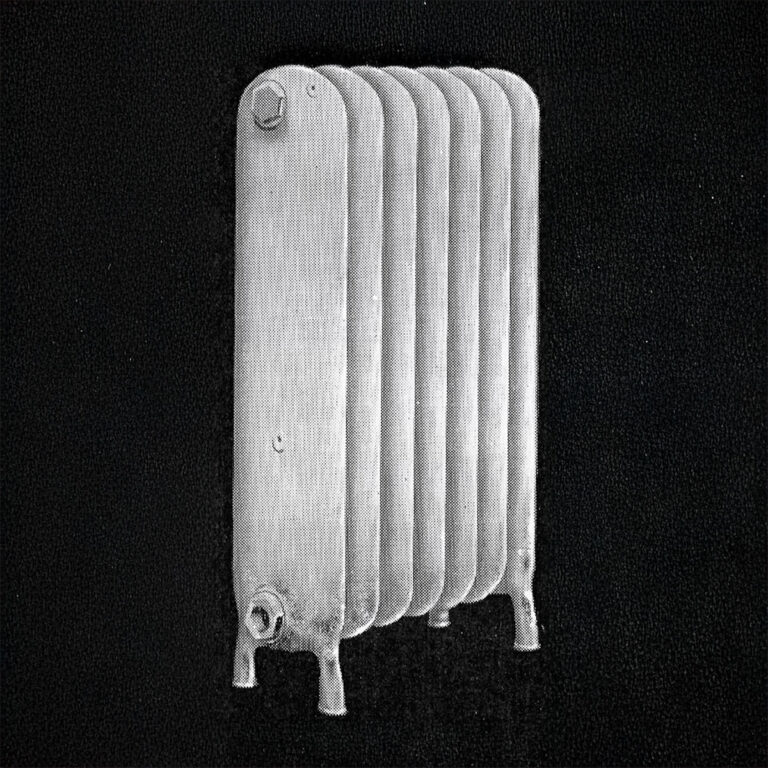
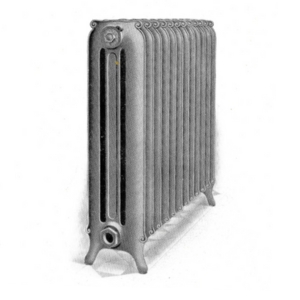
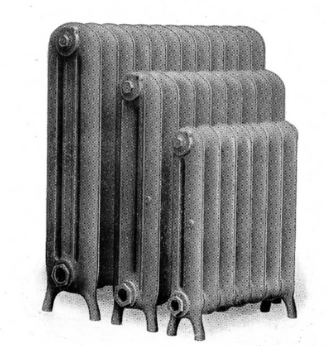
The company’s most famous model, the Princess radiator, became a staple in schools across the UK and remains one of the most recognisable designs in British radiator history.
Image: The Princess radiator range from Beeston’s catalogue (1914).
Heating From the Ground Up
When commercial central heating was first being experimented with, common early uses were usually for greenhouses and orangeries for the wealthy in the late 1700s. The origins of the Beeston Boiler Company were no different.
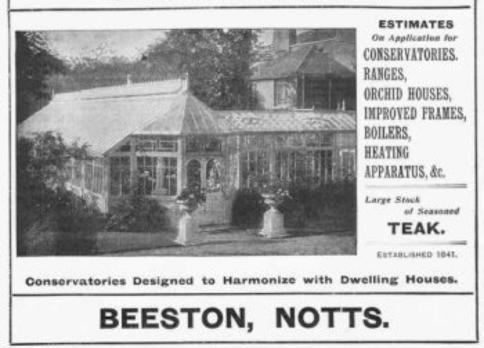
Originally, the company produced heating systems for greenhouses and orangeries; the owner even developed his own breed of apple, the ‘Pearson Plate’, named after the owner of the company, John Pearson. As central heating grew in popularity, the company shifted its focus from horticultural heating to a broader market, eventually becoming a leader in Britain’s domestic central heating industry.
Image: A late 1800s advert promoting Beeston’s horticultural heating business.
Entering the Domestic Heating Game
With their early expertise in heating for greenhouses, Beeston quickly adapted to the growing domestic heating market.
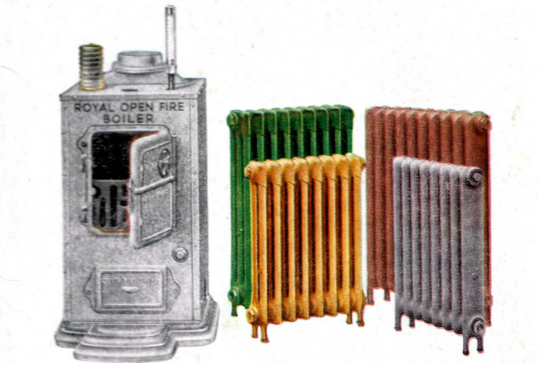
By 1903, the company shifted its focus towards a broader range of heating products, driven largely by the technical innovations of John Pearson’s son, Louis Pearson. Their ‘Robin Hood’ sectional boiler became a standout product, following trends set by similar American designs, and was soon adopted across Britain. That same year, they began advertising sectional cast iron radiators, officially stepping into competition with industry leaders like the National Radiator Company and Crane. By 1923, they solidified their position with the name Beeston Boiler Company, marking the beginning of a 50-year legacy in domestic heating.
Image: The front cover of the Beeston Boiler Company catalogue (1926)
What Happened to the Beeston Boiler Company?
Throughout the 20th century, the company faced numerous challenges, including both World Wars. During WWI, the Pearson family suffered personal losses, but the business continued, meeting wartime demands for heating systems at home and abroad.
Post-war, the company president, Louis Pearson, led efforts to rebuild with significant investments in modernising production, including the establishment of a mechanised moulding plant in 1946. However, by the mid-century, rising labour shortages and inefficiencies in mechanisation began to erode profits, setting the stage for further challenges in the years ahead.
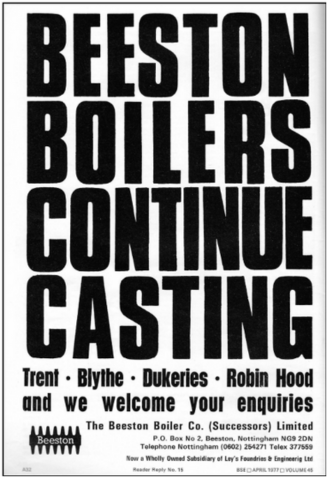
Despite challenges, the company’s impact on the local economy was undeniable. They employed hundreds of local residents and continued to invest in the business and the town, making the small town of Beeston an industrial hub.
Image: Ad advert promoting Beeston’s brief return to casting after WWII.
How to Recognise a Beeston Radiator
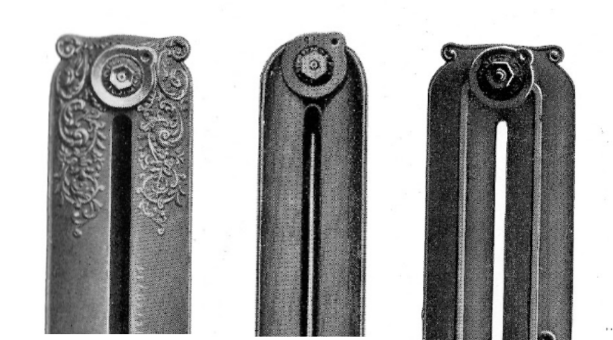
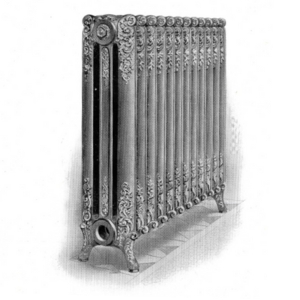
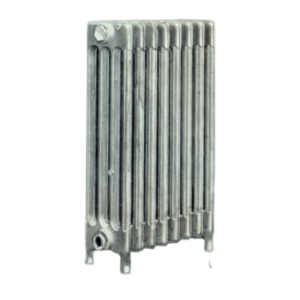
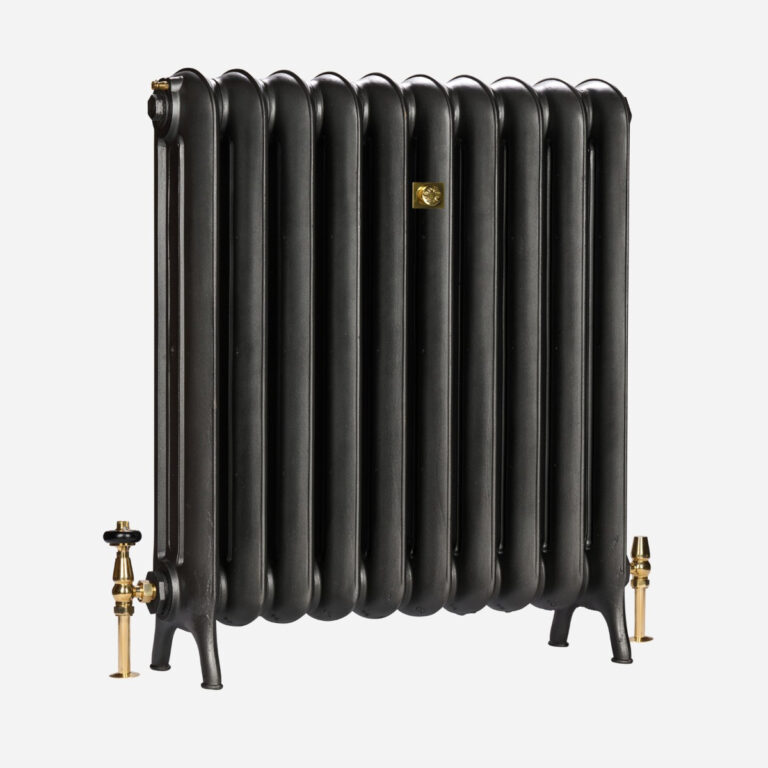
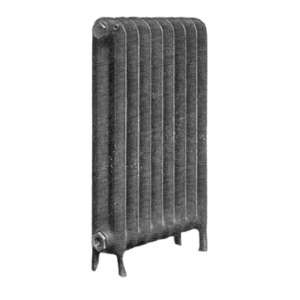
Beeston radiators from before 1936 are recognisable by a distinctive rim around the top bush, where the bleed valve plugs in, a feature unique to Beeston. This protruding element, present on all early sectional models, is the clearest way to identify early examples. Additionally, many radiators from this period, such as the Princess, Decorated, and Duchess models, have their names engraved directly onto the cast iron leg sections.
In later years, identifying Beeston radiators became more challenging as some signature features were simplified. A notable change was the transition from a slightly ornamental petal design on the bush ends to a flat, flush finish as well as a bleed valve further away from the bush of the radiator.
Image: The Beeston Boiler Company’s Decorated radiator (left), Princess (middle) and Duchess radiator (right).