



Hospital Radiators
“Both the contours and the smoothness of the castings render the radiator perfectly easy to clean” – Crane Radiators, Boilers and Radiator Accessories (1936)
Showing 1–16 of 25 results


Showing 1–16 of 25 results
Hospital Radiators
What are 'Hospital Radiators'?
Hospital radiators were designed to replace the earlier warm air furnaces that were initially used for heating hospitals. The warm air furnace system involved heating air in a basement furnace with organic fuel and circulating it through ducts to various rooms. While this system did provide warmth, it came with several drawbacks. The heated air often dried out the atmosphere and spread dust and soot, issues that were particularly problematic in a hospital.
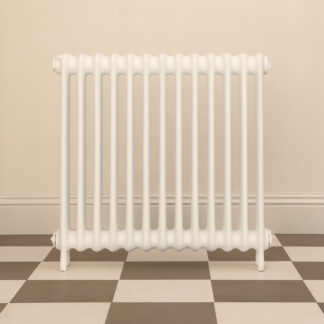
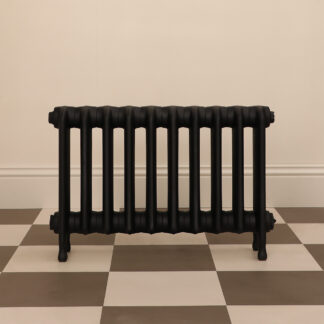
Hospital radiators solved these problems. By using a boiler, they provided heat without drying out the air or creating dust, making them ideal for sterile environments. These radiators featured smooth surfaces with no ornate details where dust could collect, and they had wide gaps between columns, making it easier for staff to clean thoroughly.
Unlike school radiators, which were named because of their frequent use in educational settings, hospital radiators were purpose-built for healthcare environments. From the beginning, manufacturers referred to them as “Hospital Radiators,” specifically designed to meet rigorous hygiene demands.
Hospital Radiators: Key Features
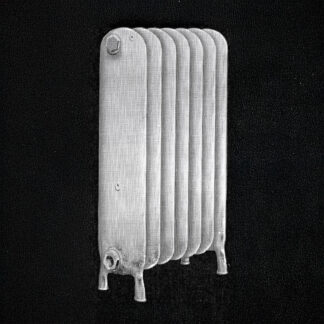
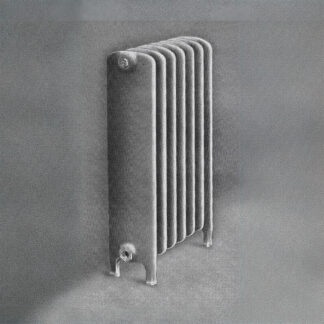
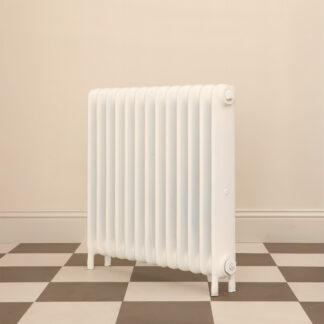
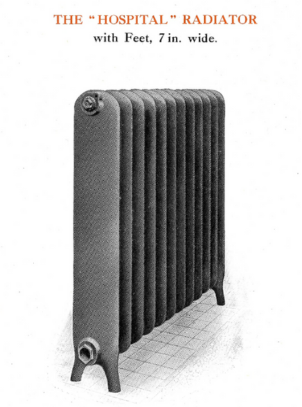
Hospital radiators are characterised by their smooth, simple surfaces, with no beading or decorative details to collect dust, in contrast to other models like school or ornate radiators. While some hospital radiators have a slightly curved top, others, such as the Ideal Hospital Radiator, feature a more rectangular shape with a flat top.
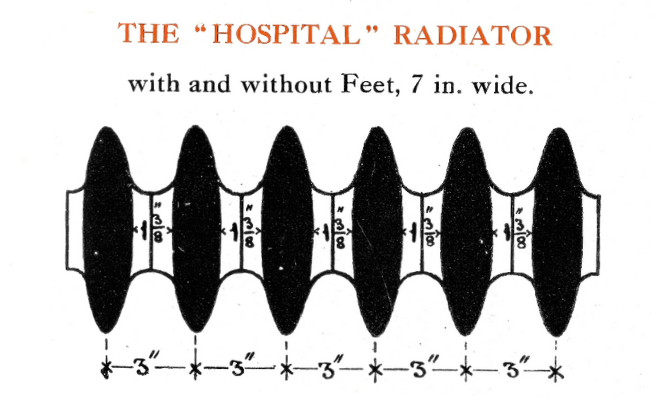
Each section of a hospital radiator typically consists of one deep column, rather than multiple smaller columns. This design creates a distinctive, easy-to-identify look. The columns are oval-shaped in cross-section, and the wide spacing between them ensures that cleaning between sections is quick and efficient.
Image: Cross-sectional view of the columns on the Beeston Boiler Company’s “Hospital” Radiator.
The Evolution of Hospital Radiators
The Beeston Hospital Radiator
The Beeston Boiler Company introduced one of the earliest hospital radiators, with records showing it was part of their original range by 1914. Available in a single depth, this model was marketed for use in both hospitals and schools.
Beeston emphasised its cleanability, noting that the columns were 1.5 inches wide at their narrowest, which, combined with the lack of decorative detailing, made them easy to maintain.
The Ideal Hospital Radiator
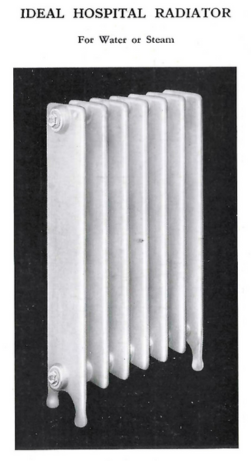
The Ideal Hospital Radiator was the National Radiator Company’s first and only radiator specifically designed for hospital use.
Unlike the Beeston model, the Ideal Hospital Radiator had a flat top, giving the columns a more rectangular profile. Another distinguishing feature was the placement of the bleed valve in the top corner of the radiator’s column rather than attached to the bush end, common in all early Beeston designs.
The Crane Hospital Radiator
In keeping with Crane’s philosophy of practical and efficient design, their Hospital Radiator was purpose-built to serve hospitals’ specific heating needs.
Available in three depths, the narrowest version resembled a single-column school radiator, while the broader versions offered more substantial heat output, more akin to other types of hospital radiators.
Shop Crane Hospital Radiators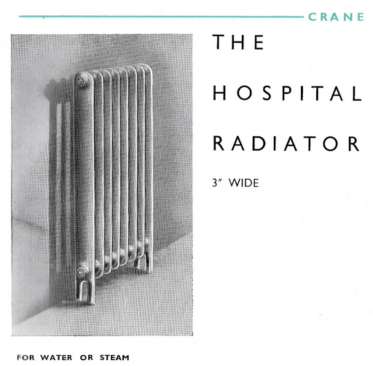
The Neo-Hospital Radiator
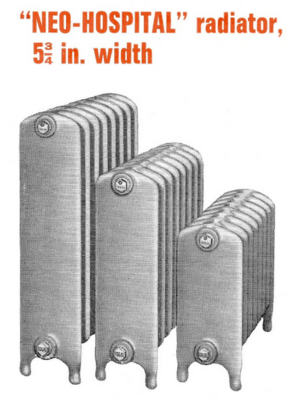
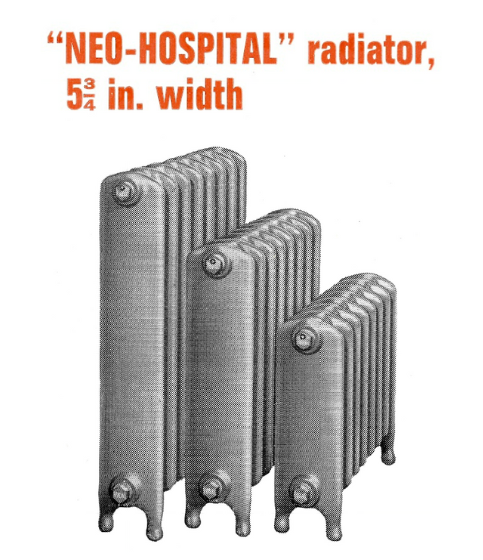
The Neo-Hospital Radiator, designed by Ideal Standard (formerly the National Radiator Company), was one of the last hospital radiator models created by original radiator manufacturers. This model came in three depths and up to nine heights, with a more gently curved top than earlier hospital radiators like the Ideal or Crane models.
Despite the shift towards more modern Edwardian column radiators from the 1920s, the Neo-Hospital continued to be produced into the 1970s. Its long production run speaks to its functional design and continued relevance in healthcare environments, where decorative design took a backseat to practicality and hygiene.
Shop Neo Hospital Radiators