




Church Radiators
Popular in churches in the mid to late 19th century, ‘Church Radiators’ are some of the first radiators ever made.
Showing all 11 results


Showing all 11 results
The Evolution of Church Heating
Stoves
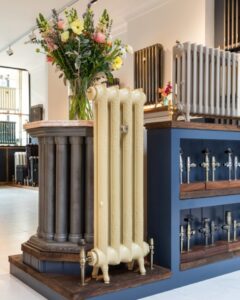
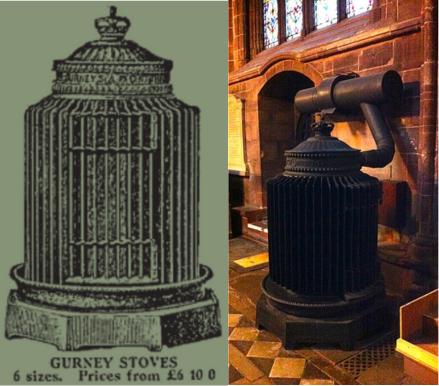
Before central heating became widespread, large buildings, including churches, relied on stoves to generate heat. In the mid-19th century, stoves like the Gurney Stove (pictured here) were the most popular method for heating churches, as central heating systems were still in their infancy.
The Gurney Stove, patented by inventor Goldsworth Gurney, became the go-to heating solution. By some estimates, this stove heated around 22 cathedrals and 10,000 churches by the mid 1800s.
Image: An illustration and lifestyle image of the popular Gurney Stove.
Pipe Coils
Following stoves, pipe coil systems emerged as the next significant development in church heating. These systems originated from the ‘Perkins System,’ invented by Angier March Perkins in the early 1800s. This setup consisted of coiled pipework inside a brick furnace, circulating hot, high-pressure water around the building’s perimeter. The system operated at extreme pressures, up to 2000 PSI (about 10 times today’s typical boiler pressure), with water temperatures reaching 170°C.
Due to safety concerns and the risks posed by such high pressures, later designs featured lower temperatures and reduced pressure, but still utilised coiled pipe configurations. These “pipe coils” became common in churches throughout the middle of the 19th century.
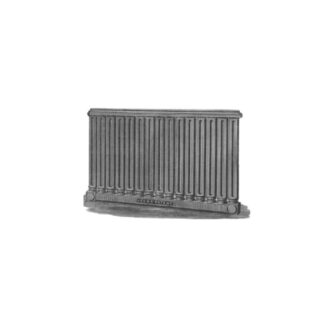
Image: Sketch of a Perkins System style pipe coil (left) and a later, low pressure design (right).

Church Radiators
Church radiators succeeded stoves and pipe coil systems as central heating became more advanced. As churches were some of the first public buildings to adopt this technology, these early radiators earned the name “church radiators,” similar to how school radiators later received their name from the environment they served.
These early church radiators had a distinctive design that set them apart from later school or hospital radiators. Learn more about their unique features below.
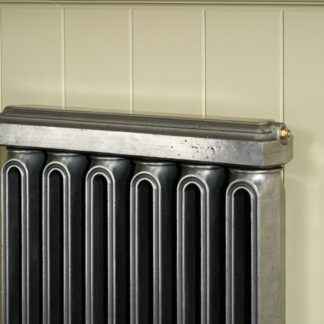
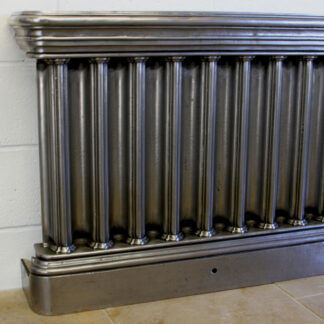
Image: A tubular church radiator (left) and standard church radiator (right).

Key Features of Church Radiators
Identifying key features of church radiators can be challenging due to the wide variety of designs. Differences in the cross-sectional shape of the columns, as well as the structure of the columns themselves, make these radiators quite diverse.
Typically, early church radiators were built in sections that plugged into a base, like the Sunbeam radiator. This method of construction was phased out after the innovations of the 1880s, which introduced more modern radiator assembly techniques. Some church radiators, such as the Sunbeam radiator, employed looped tube designs similar to the Bundy Loop, another early heating method.
Image: The Sunbeam radiator (right) and sketch of a common church radiator section shape (left).
